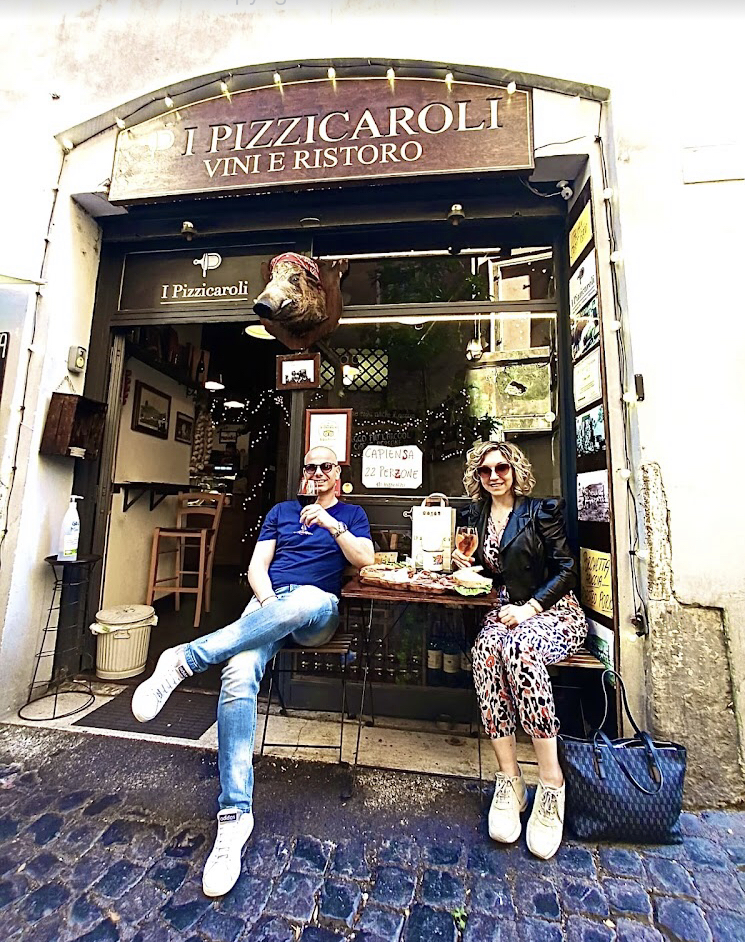
Recommended by an Italian friend wow it did not disappoint! Off the piazza and away from the crowds. Very cute bar with Italian slogans all over the place (wish we could have understood them). Helpful staff. €6 spritz the Hugo was stunning! Could have happily stayed all day drinking them. We tried ordering x2 Nonnas and one caprese and the kind chap at the till told my partner it was too much for just two people. So one Nonna and one caprese and wow it was huge and amazing and did not disappoint. Food heaven. We thoroughly enjoyed our time here. Beautifully presented you can tell they really care about the produce they serve.
Overview
Walking down Via della Fossa near Campo de’ Fiori, the rhythm of Rome feels close enough to touch, and that’s exactly where i Pizzicaroli makes its mark. Tucked at Via della Fossa, 9, 00186 Roma RM, Italy, this spot has the relaxed confidence of a family-run trattoria that knows who it is and doesn’t need to shout about it. I first stopped in after a long afternoon wandering between markets and churches, hungry in that very Roman way where only something honest and filling will do.
What stands out immediately is the atmosphere. Tables are close, conversations overlap, and the staff moves with the ease that comes from doing the same things well for years. This place leans hard into Roman classics, and that’s not a marketing line-it’s reflected in the menu and in how the kitchen operates. Many Roman eateries follow a short-card philosophy, and food historians often point out that this keeps quality high while preserving regional identity. Slow Food Italy has long emphasized this approach as a way to protect local culinary heritage, and you can feel that thinking at work here.
On my first visit, I watched the kitchen prep artichokes Roman-style, trimming them down to the tender heart and braising them slowly with herbs and olive oil. That method, passed down through generations, is a practical example of nose-to-tail cooking, a practice rooted in rural Italian food culture. According to research from the University of Gastronomic Sciences in Pollenzo, using the whole ingredient isn’t just tradition-it reduces waste and intensifies flavor. The result on the plate is soft, deeply savory, and unmistakably Roman.
Pasta is where many reviews focus, and for good reason. The cacio e pepe relies on technique more than ingredients: starch-rich pasta water, aged pecorino romano, and aggressive black pepper. When done wrong, it clumps; when done right, it emulsifies into a glossy sauce. Here, it lands squarely in the second category. Watching the server explain the dish to a curious tourist, you could tell this is something they’ve repeated a hundred times, not from a script, but from lived experience.
Meat dishes also play a strong role on the menu, especially lamb and offal, which are staples of traditional Roman cooking. Italy’s national statistics agency, ISTAT, has shown that travelers increasingly seek out authentic regional food experiences, and diners here reflect that mix-locals on lunch break, visitors who did their homework, and repeat customers greeted by name. That blend adds credibility you can’t fake.
The location helps, too. Being so close to Campo de’ Fiori means the ingredients often mirror what’s fresh and available nearby. While not every product is hyper-local, the sourcing is sensible and transparent, which builds trust. One server openly mentioned that certain cuts sell out early, a small limitation that actually reinforces the sense of freshness rather than detracting from it.
Reviews online tend to echo similar themes: straightforward food, fair prices for central Rome, and a welcoming vibe that doesn’t feel staged. Not every dish will surprise you, and that’s kind of the point. This is comfort food grounded in history, served without pretension. For anyone trying to understand Roman cuisine beyond postcards and clichés, sitting down here offers a practical lesson-one plate at a time.
Good to know
Service options
✓ Outdoor seating ✓ Dine-in ✓ DeliveryHighlights
✓ Great wine listPopular for
✓ Breakfast ✓ Lunch ✓ Dinner ✓ Solo diningAccessibility
✓ Wheelchair-accessible entrance ✓ Wheelchair-accessible seating ✓ Wheelchair-accessible car parkOfferings
✓ Alcohol ✓ Beer ✓ Late-night food ✓ Organic dishes ✓ Quick bite ✓ Small plates ✓ Spirits ✓ Vegetarian options ✓ WineDining options
✓ Breakfast ✓ Lunch ✓ Dinner ✓ Counter service ✓ Dessert ✓ Seating ✓ Table serviceAmenities
✓ Toilet ✓ Wi-Fi ✓ Wi-FiAtmosphere
✓ Casual ✓ Cosy ✓ Quiet ✓ TrendyCrowd
✓ Family friendly ✓ Tourists ✓ University studentsPlanning
✓ Dinner reservations recommended ✓ Accepts reservationsPayments
✓ Credit cards ✓ Debit cards ✓ Credit cardsParking
✓ ParkingPhotos
1 / 4
Location
Reviews
- No ratings yet 1401 reviews
This was the first place my son and I ate after arriving in Rome. We searched for "charcuterie near me" and this place came up. It was also the best place we ate all the whole trip. The quality of the food is phenomenal. The prices are reasonable. The people who work there are friendly, and tried to help us Americans how to order. It's a small place with only a few tables and only one outside so if you want a louder atmosphere this isn't that. But, if you want a relaxing, laid back meal with some of the best cured meats you've ever had, presented in a fabulous way at reasonable prices - go here! Very short stroll from Piazza Navona. the service ranking doesn't really apply here because you pick up your own order at the counter after they have prepared your platter.
Great bruschetta and very large portions, strong drinks for a great price! Come here if you want to try a variety of very fresh bruschetta (meats and cheeses). Our favourite bites were the pesto and the tomato and basil (extremely fresh!). Great selection of meats like mortadella and prosciutto with olives and honey. Overall a great place slightly away from the crowds to pass some time!
We had an amazing lunch here! The service was great and the food was even better.
Quintessential streetside charcuterie restaurant. The food was amazing, and the atmosphere was something straight out of a movie. There are lots of great little spots to stop and eat throughout Rome, but this was one of our favorites. If you are nearby, definitely stop in and grab lunch at a table outside on the street.
Had the Rustico Bruschettoni which is cheek pork (guancale) and cheese on toast. The portions are generous and it was outstandingly delicious. The cheek pork is nothing less than crispy, salty goodness. Pretty sure I had a dream about this later that same night.
Do yourself a favour it’s a must to try. The food was to die for in a little cobble stone alleyway this place was so cute. Highly recommend the pork was amazing! We even got to stay after hours after everyone had left and had a shot with the owner. Lovely Italian hospitality
Amazing. Staff where extremely genuine, friendly and gave a homely feel to the place. They gave us recommendations which we took and we could not have asked for more. The food was amazing. But our highlight was watching my kids and the 2 staff members sing and dance while they worked and we ate. It made it one of our most favourite experiences in Rome. Highly recommend.